

Solving a Rubik’s Cube is impressive, but showing off mastered patterns on your cube? That’s where the fun really begins. The Rubik's Cube isn’t only a brain teaser; it's a blank canvas for creativity. Whether you're new to cubing or you’ve solved it a hundred times, learning patterns transforms your cube into a piece of art.
In this guide, you’re going to discover some of the coolest Rubik's Cube patterns out there, learn exactly how to make them, and even pick up tips on creating your own. Get ready to turn your cube into something worth showing off.
The Classic Rubik’s Cube Patterns (with How-Tos)
This is where the magic really happens. Patterns take the Rubik’s Cube from a mere brain teaser to a dynamic visual display. These timeless classics have been passed down through generations of cubers because they are not only eye-catching but also a joy to create.
Before you start, always make sure your cube is in its solved state. Starting fresh is key to ensuring these patterns come out clean and precise.
1. Checkerboard Pattern

What it looks like: Alternating squares of color on every face, creating a bold and unmistakable checkerboard effect.
Why it’s special: The checkerboard is one of the first patterns most cubers learn, and for good reason. It's easy to execute, quick to revert, and immediately recognizable. This is the pattern that makes people stop and stare.
How to do it:
- Turn the middle layer twice (M2)
- Turn the equator layer twice (E2)
- Turn the standing layer twice (S2)
Don’t forget to hold your cube so you can see how the alternating blocks line up before you start. Visualizing the end result helps make your moves smoother.
2. Cube in a Cube
What it looks like: A smaller cube embedded perfectly within the larger cube, framed by contrasting colors.
Why it’s special: This pattern is often the first "illusion" design people fall in love with. The moment you finish and see that tiny cube appear, you’ll understand why it's so popular.
How to do it:
- F L F U' R U F2 L2 U' L' B D' B' L2 U
Tips for success:
- Keep your cube aligned during the moves.
- Practice the algorithm slowly a few times before attempting it at full speed.
3. The Cross (Plus Sign)

What it looks like: Each face of the cube displays a perfectly symmetrical cross or plus sign.
Why it’s special: This pattern is super clean and minimalistic. It’s quick to create and gives the cube a polished, uniform look that appeals to perfectionists.
How to do it:
- M2 S2 M2
Keep in mind that because this one is fast and simple, it’s a great warm-up pattern before trying more complex designs.
4. Cube in a Cube in a Cube
What it looks like: A mind-bending design where a small cube sits inside a medium cube, which itself sits inside the full-sized cube.
Why it’s special: This is a showstopper. If you want people to ask, "How is that even possible?"—this is the pattern for you.
How to do it:
- F' L F D2 R' B R F2 L2 U F U' D2 F2
Take your time and double-check your moves. This one takes a bit of focus, but it’s totally worth it when you nail it.
5. The Dot Pattern

What it looks like: A single colored square (the dot) floats in the center of each face while the surrounding tiles stay uniform.
Why it’s special: It’s subtle yet eye-catching. This is a playful pattern that adds a touch of whimsy to your cube without overwhelming the design.
How to do it:
- U D' L R' F B'
This pattern is easy to create and equally easy to undo, making it ideal for quick demonstrations or casual fun.
By mastering these five classic patterns, you open the door to endless creativity and cubing enjoyment. These designs build the foundation for more complex patterns down the line and give you a solid grasp of how the cube’s movements affect its overall appearance. Take your time, enjoy the process, and remember: every twist is part of the art.
Quick Wild and Wacky Patterns for Show-Offs
Ready to take your cube game up a notch? These patterns are flashier, a little trickier, and guaranteed to get some oohs and ahhs.
1. The Snake (Stripe) Pattern

What it looks like: Diagonal stripes that wind across the cube.
How to do it:
- M2 U M2 U M' U2 M2 U2 M' U2
Once you’ve done this one, twist the cube in your hands. The stripes seem to slither around the cube. It’s hypnotic.
2. The Anaconda (Spiral)

What it looks like: A twisting spiral that loops across multiple faces.
How to do it:
- R U R' U R U2 R'
- Do this sequence on each side.
This one takes patience but has an awesome swirling effect that you’ll love.
3. The Flower Pattern

What it looks like: The centers of each face are surrounded by contrasting petals.
How to do it:
- F D R D' R' F'
- Repeat for every face.
It’s playful and definitely a favorite for sharing photos.
How to Memorize Rubik’s Cube Patterns
Memorizing Rubik’s Cube patterns might seem overwhelming in the beginning, especially when you see long strings of letters and symbols that look more like secret codes than anything else. But the good news is that with the right approach, it becomes not only manageable but actually fun. Think of it like learning a dance: each move builds on the last, and once you get the rhythm, your hands start moving almost automatically.
Here are some essential tips to help you get to that point:
Learn the notation first and foremost.
Before you can perform patterns, you need to speak the language of the cube. In cubing, notation refers to the letters that represent moves. For example, "U" stands for turning the top (Up) layer clockwise, while "F" means turning the front face. Familiarize yourself with all basic notations, including U, D, L, R, F, B, and their inverses (U', D', etc.). Understanding these is the key to reading algorithms confidently.
Visualize each move before doing it.
Before physically turning the cube, pause and mentally imagine what each move will do to the position of the pieces. This mental rehearsal helps build a strong connection between the abstract notation and the actual physical transformation of the cube. The more you do this, the more you start to "see" the moves in your mind—and that’s where true mastery begins.
Break long sequences into manageable chunks.
Many Rubik’s Cube patterns involve multiple-step algorithms. Rather than trying to memorize the entire sequence at once, divide it into sections. For example, you might focus on learning the first four moves, then the next four, and so on. This chunking method works wonders for memory retention and also reduces the chances of making errors halfway through.
Associate moves with visual cues.
Some cubers find it helpful to give moves nicknames or associate sequences with images or stories. For instance, you could think of a repeated "R U R' U" sequence as a "wave" motion. This storytelling approach can make patterns stick in your memory far better than dry repetition.
Practice with intention and regularity.
Consistent practice is crucial. Set aside time daily or weekly to revisit old patterns and introduce new ones. Your muscle memory will strengthen over time, and soon, your hands will instinctively know where to go even when your brain hesitates. Repetition solidifies both the knowledge and the physical dexterity required.
Use visual aids and cheat sheets.
Don’t hesitate to keep a printed or digital reference handy while learning new patterns. Many cubers use diagrams, videos, or apps that show each move visually. This can dramatically speed up your learning, especially when tackling more complex designs.
Understand the “why” behind the pattern.
Instead of memorizing moves blindly, try to grasp why each move is necessary and what effect it has on the cube. Patterns follow logic, and by recognizing that logic, you can sometimes recreate or fix a pattern without starting over. This deeper understanding sets apart those who simply copy moves from those who truly master the craft.
Digital Tools to Help You Learn Patterns

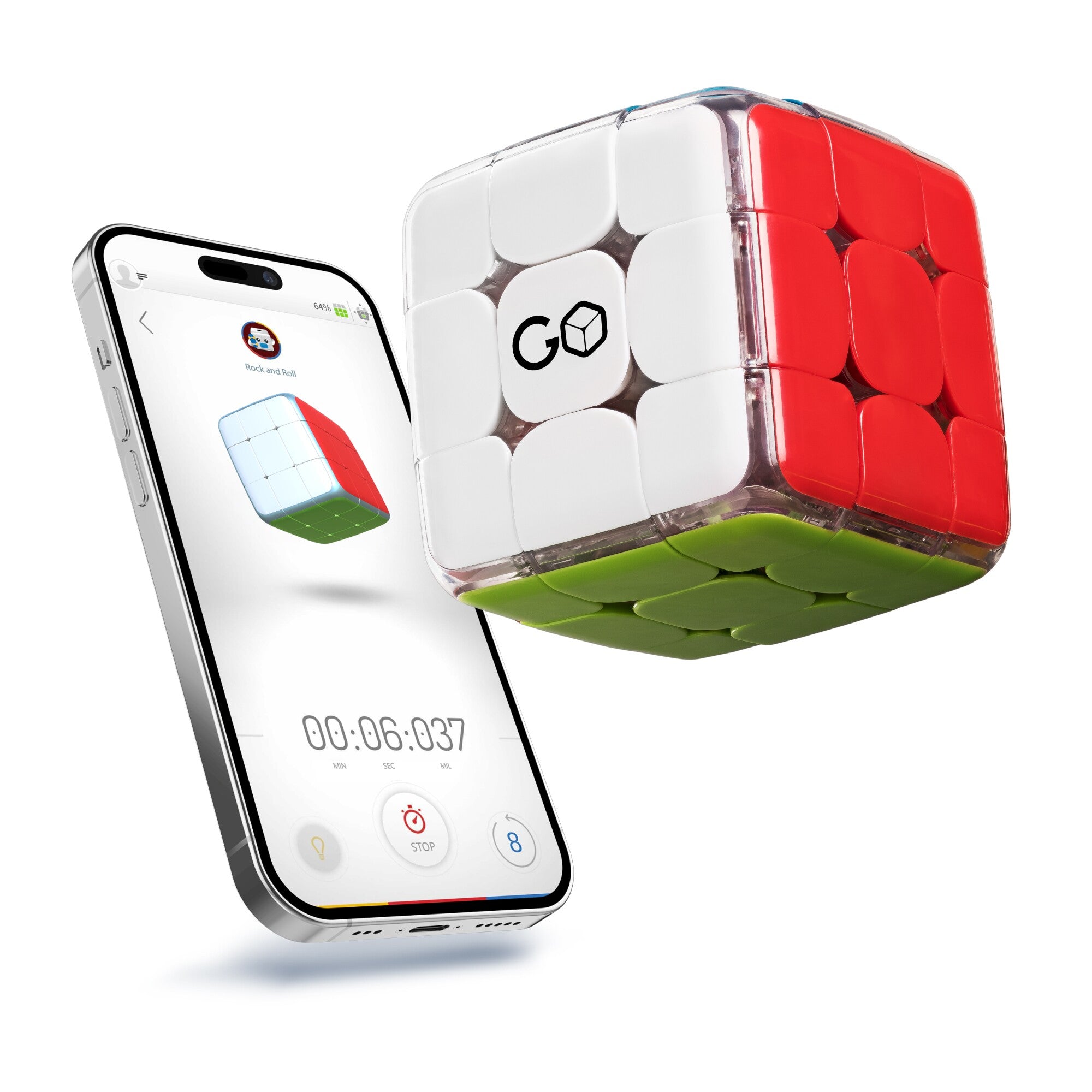
If you’re looking for a fun, interactive way to get better at cubing, GoCube is hands down one of the best tools out there. It makes learning patterns, algorithms, and even full solves feel easy and genuinely enjoyable.
What is GoCube?
GoCube is a modern twist on the classic Rubik’s Cube. It looks and feels like a regular cube, but it's packed with Bluetooth connectivity and smart sensors that track every single move you make in real time. All of that data syncs instantly with the GoCube app on your smartphone, transforming your cube into an interactive learning experience.
Why is GoCube perfect for learning patterns?
- Step-by-Step Tutorials: The GoCube app doesn’t leave you guessing. It walks you through every move slowly and visually, so you can see exactly how each twist and turn affects the cube.
- Real-Time Feedback: If you make a mistake while trying a pattern, GoCube doesn’t punish you. It shows you exactly where you went off track, helping you correct and learn without frustration.
- Pattern Library: GoCube comes loaded with a growing collection of patterns, from classic designs like the checkerboard to more advanced, mind-bending patterns you can show off to friends.
- Performance Tracking: As you practice, GoCube keeps tabs on your progress, showing you how fast you’re improving and which patterns you’ve mastered.
- Fun Games and Challenges: When you need a break from patterns, GoCube offers addictive mini-games and battles where you can compete with cubers worldwide.
Who is GoCube for?
GoCube is ideal for everyone from total beginners to well-seasoned cubers. If you’re new to patterns, the visual guides and interactive coaching help you learn without the usual confusion. If you’re more advanced, the smart tracking and competitive games keep you sharp and entertained.
Plus, the physical cube itself is buttery smooth, with excellent corner cutting and color shades that make patterns pop beautifully. It’s not only a smart cube, it’s also a genuinely satisfying one to hold and turn.
Bonus Tip:
Record your experience with GoCube and share your favorite patterns with friends or post them online. It’s a fantastic way to join the global cubing community, where creativity and friendly competition come together.
If you want to master Rubik’s Cube patterns in the most fun, interactive, and frustration-free way possible, GoCube is absolutely the way to go.
Common Mistakes to Avoid
Even experienced cubers run into hiccups when working on patterns. The beauty of cubing lies in the details, and a small slip can easily throw off your entire design. Here are some common pitfalls to watch out for, along with a few helpful tips to steer clear of them:
Forgetting where you started: This is more common than you might think. Always start with a fully solved cube so you have a clear baseline. Trying to build patterns on an unsolved or mixed cube can lead to frustration and confusion.
Losing track of moves: Patterns often involve specific sequences that need to be followed exactly. It's easy to lose your place halfway through. Take your time, move at a steady pace, and if you need to, write down each step or use a digital guide to help you stay on track.
Accidental quarter turns: Sometimes your fingers get ahead of your brain. A slight misalignment or an unintended twist can disrupt the pattern without you noticing right away. To avoid this, slow down and be mindful of every move, especially when you're new to a pattern.
What Makes Rubik’s Cube Patterns So Worth Learning
Patterns bring an entirely new dimension to the world of cubing. While many people focus solely on speedcubing, trying to solve the cube in record time, there’s a whole side of the Rubik’s Cube that is about something completely different: style, creativity, and sheer enjoyment.
Patterns Are Visually Stunning
There is something deeply satisfying about seeing a perfectly executed checkerboard pattern or a mesmerizing spiral wrap itself around your cube. The vivid colors, clean symmetry, and clever designs immediately grab attention. Patterns turn your cube from a puzzle into an object of beauty. It’s like giving your cube a wardrobe makeover, making it stand out whether it's sitting on your desk or spinning in your hands.
Patterns Help You Understand the Cube on a Deeper Level
When you start experimenting with patterns, you begin to notice how the cube's pieces move, how layers shift, and how every rotation plays a part in the final result. This kind of practice strengthens your spatial awareness and logical thinking. Without even realizing it, you’re learning the core mechanics that can help you become a better solver in the future. The more patterns you try, the more intuitive the cube’s structure becomes.
Patterns Impress (and Spark Curiosity)
Let’s be honest: pulling out a Rubik's Cube covered in an intricate design is bound to get reactions. Whether it's friends, family, or total strangers, people can't help but ask, "How did you do that?" It’s a conversation starter, a little show-off moment, and a way to spread the joy of cubing. Patterns give you that extra flair, something beyond the typical solve that grabs attention and admiration.
Patterns Build Muscle Memory and Dexterity
Working on patterns isn't only about how the cube looks when you’re done, it’s also an excellent workout for your hands and mind. Many patterns require sequences of moves that improve your finger dexterity, speed, and control. Over time, these patterns become second nature, making your hands faster and your movements more precise. This muscle memory can also be a huge asset if you decide to dive into speedcubing or more complex solving methods later on.
Patterns Are Relaxing and Rewarding
Unlike the sometimes frantic pace of timed solves, working on patterns is often calming. You can take your time, enjoy the process, and savor the moment when the final turn reveals something beautiful. Many cubers describe working on patterns as almost meditative, a way to unwind while still engaging the brain in a playful challenge.
More Than Solving: Cubing as an Art
The Rubik’s Cube isn’t only a puzzle to be solved. It’s a creative outlet, a brain workout, and a fun way to express yourself. Whether you’re rocking a checkerboard or showing off an intricate spiral, patterns add a whole new level of enjoyment to cubing.
So grab your cube, try out some patterns, and who knows? You might invent the next big design that has everyone talking.